UK’s ‘death railway’ where only some passengers got return tickets | UK | Travel
The railway gave Londoners a more dignified burial (Image: Surrey Advertiser – Grahame Larter)
The Victorian era is known for its peculiar approach to death, from post-mortem photography to an obsession with Memento Mori keepsakes serving as stark reminders of life’s finite nature. Yet one particularly eerie chapter of Victorian history has largely faded from memory – a disused railway line with a macabre purpose.
During the early years of Queen Victoria’s reign, London had a horrific problem. The Industrial Revolution had caused the capital to balloon in size, doubling its population to 2.5 million inhabitants in a short space of time. Many residents were crammed into squalid, disease-ridden quarters where outbreaks of illnesses like Cholera were rampant. London had become the world’s largest city, yet it lacked proper sewage infrastructure and clean water supplies, resulting in widespread illness and early deaths. A child born in London during the 1840s could expect to live merely 36.7 years on average.
READ MORE: Spanish islands no one has ever heard of have the world’s best beach
READ MORE: Pretty villages and ‘top’ seaside town in UK’s ‘best’ beauty spots—full list

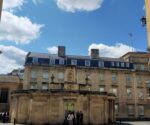
The train ran from a private station steps from London Waterloo (Image: Getty)
The capital’s churchyards quickly reached breaking point, forcing authorities to resort to the ghastly practice of digging up corpses to accommodate fresh burials. To address this crisis, plans were drawn up for an expansive new burial ground in Brookwood, Surrey.
However, transporting bodies to this distant location by traditional horse-drawn carriage would have required several hours. This challenge gave birth to an innovative yet unsettling solution – the London Necropolis railway, reports the Mirror.
The London Necropolis railway station was constructed nextto Waterloo, boasting a stunning, elaborate facade characteristic of Victorian design. From here, the bodies of individuals from all walks of life and social backgrounds were prepared for their ultimate 23-mile voyage to the newly established Brookwood Cemetery in leafy Surrey, far removed from the grimy streets of London.

One way tickets were issued for coffins (Image: Wikimedia)
Coffins were allocated a single ticket, whilst mourners travelling with them received a return fare to bring them back to the capital following the ceremony. Upon reaching Brookwood, the trains stopped twice at the Anglican and Nonconformist sections of the burial ground, determined by the faith of the departed.
While people from various backgrounds found their final resting place at Brookwood, the wealthy naturally benefited from better funeral arrangements compared to Victorian working-class families. A first-class service included selection of burial locations and permission to install a permanent monument such as a gravestone.
Those opting for a second-class service could erect a headstone or memorial for an extra charge, though failure to do so meant the plot risked being reused. Third class burials were reserved for those receiving pauper’s funerals, funded by their local parish. While these individuals weren’t afforded their own headstones, they were laid to rest in individual graves, offering far greater dignity than the appalling burial methods prevalent in London’s graveyards during that era.

Brockwood Cemetery still has a few remaining sections of track where the London Necropolis Railway ran (Image: Surrey Advertiser – Grahame Larter)
Around 80% of The London Necropolis Company (LNC) burials were third class, catering to families unable to afford funeral costs. First and second class passengers enjoyed a dedicated waiting room, and their deceased relatives’ names were called out as coffins were loaded onto the train, a ceremonial gesture denied to those in third class.
As the capital continued to expand, with the construction of the London Underground, proper sewerage networks, and overground rail lines, many churchyards stood in the way of this progress. The Necropolis Railway undertook a massive operation, transferring remains from 21 churchyards throughout the capital to the Surrey burial ground.
Services operated daily, with Sundays proving exceptionally popular for funerals. It was the only day most Victorian workers had off, and by arranging their relatives’ funerals then, they could prevent losing additional wages.

The station had a beautiful ornate style (Image: Science & Society Picture Library, SSPL via Getty Images)

The Necropolis Railroad Station was destroyed in WW2 (Image: © CORBIS/Corbis via Getty Images)
The London Necropolis Railway operated until 1941, when a Second World War bomb obliterated the London station and railway line. By then, funeral directors were incresingly using motorised hearses, and during the post-war rebuilding of the capital, restoring the demolished funeral train service wasn’t considered a priority, so the service never resumed.
If you visit Westminster Bridge House, remnants of the former station building’s façade remain visible, though the original signage has been covered over. Yet at Brookwood Cemetery, traces of this peculiar historical episode are still in sight.
Sections of the railway track can still be spotted, while commemorative plaques honour the 200,000 individuals who arrived at their eternal resting place via this unique rail route.
Have a story you want to share? Email us at webtravel@reachplc.com