Brits face new border rule in 29 countries in Europe after April law change | UK | News
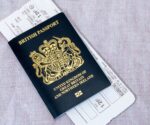
The new rule is part of a post-Brexit deal between the UK and the European Union (Image: Getty)
British holidaymakers face a new border rule in 29 countries across Europe following an April law change.
The European Union (EU) began rolling out a new Entry/Exit System (ESS) from October 12 last year, which is designed to improve border security within the EU and its neighbouring countries. The system, which requires Brits to register their fingerprints and a facial photo at European borders on entry, aims to stop visitors from overstaying and reduce illegal migration within the Schengen area.
The ESS has been gradually introduced since last year but it will become fully operational at the external borders of 29 European countries from April 10, 2026.
Read More: New £253 charges on flights to Australia, Thailand, Mexico and Japan from April
Read More: British Gas urges homes to use ‘11am rule’ to cut energy bills ‘immediately’
The new entry system is governed by EU law and applies to non-EU nationals, including UK citizens, visiting for short stays of up to 90 days in a 180-day period.
The digital border system is replacing the current process of manually stamping passports with biometric data instead and will be fully in place from early next month.
The European Union said: “The new Entry/Exit System (EES) started to be operational on 12 October 2025. European countries using the EES are introducing the system gradually at their external borders. This means that data collection will be gradually introduced at border crossing points with full implementation by 10 April 2026.”
The change is part of a post-Brexit deal struck between the UK Government and the EU and will allow Brits at European airports to use e-gates. It means it will be quicker and easier for passengers flying into and out of EU countries to get through airport security.
Since Brexit, British tourists arriving at EU airports have had to queue for manned desks to have their passports physically stamped, rather than use automated gates with facial recognition technology.
The process has led to many facing long queues at border control on arrival, particularly during peak holiday periods, but this is set to change under new rules that will allow Brits to use e-gates at EU airports.
The automated EES system will register non-EU nationals travelling for a short stay each time they cross the external borders of 29 European countries, including popular holiday destinations such as Spain, France, Portugal, Italy and Greece.
As part of the entry process, Brits will be required to register their fingerprints and provide a facial image on arrival, and this data will then be digitally stored for up to three years from their last recorded trip.
For the purpose of the EES, ‘non-EU national’ means a traveller not holding the nationality of any European Union country or the nationality of Iceland, Liechtenstein, Norway or Switzerland, and ‘short stay’ means up to 90 days within any 180-day period. This period is calculated as a single period for all the European countries using the EES.
Entries and exits, or entry refusals, will be electronically recorded in the EES, but in Cyprus and Ireland, despite being EU member states, passports will still be stamped manually.
Listed are the 29 European countries where the EES will be fully in operation from April 10:
- Austria
- Belgium
- Bulgaria
- Croatia
- Czechia
- Denmark
- Estonia
- Finland
- France
- Germany
- Greece
- Hungary
- Iceland
- Italy
- Latvia
- Liechtenstein
- Lithuania
- Luxembourg
- Malta
- Netherlands
- Norway
- Poland
- Portugal
- Romania
- Slovakia
- Slovenia
- Spain
- Sweden
- Switzerland