US jet pilot shot down in Iran ‘now in crucial race against time’ | World | News
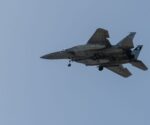
An ex-RAF pilot reveals the brutal ejection and hostage training jet crews endure (Image: Getty)
The remaining pilot of the downed US jet in Iran is facing a “race against time” to avoid capture after ejecting from their aircraft, an ex-RAF pilot has warned. Speaking after reports that a US F-15 Eagle had been shot down over Iran on Friday (April 3), Jonathan Singh, journalist and former RAF pilot, told the Express that the survival window for the remaining crew member could be critically short, with rescue forces potentially more than an hour away.
He explained that the pilot’s immediate condition after ejecting is the first major unknown. “An ejection can be extremely violent,” he said. “If they’ve been hit by a missile, they could already be injured – and the act of ejecting itself often causes significant physical trauma.” Despite early indications suggesting the crew may be mobile, he stressed that even relatively minor injuries could dramatically reduce their chances of evading capture in hostile terrain. “If they are able to move, their first priority will be to alert rescue crews to their position,” he said. “But even then, it becomes a race against time.”
READ MORE: ‘One crew member rescued’ from US fighter jet downed in Iran
READ MORE: Inside ‘torturous’ Iran PoW prison it keeps captives as US jet shot down

All aircrew operating in hostile environments undergo rigorous survival training, known as SERE (Image: Getty)
According to the former pilot, who flew rescue helicopters in Afghanistan, even in ideal conditions, it could take at least an hour for rescue teams to reach the downed crew, depending on where the former launched from, leaving them dangerously exposed.
During that window, the pilot faces the threat of being discovered by Iranian forces or civilians. Following the alleged incident, the anchor on a local channel in Iran’s Kohkilouyeh and Boyer-Ahmad province read the following announcement: “If you capture the enemy pilot or pilots alive and hand them over to the police, you will receive a precious prize.”
“You don’t know if they’re going to be friendly in this situation or not,” Mr Singh said, adding that capture would carry serious consequences beyond the immediate danger to the airman.
“It’s horrendous in terms of morale, propaganda, and the potential for exploitation,” he warned, pointing to past incidents where captured personnel were used for political leverage. He also noted that the captured pilot could face interrogation or mistreatment.

The ‘hostile’ terrain in Iran further complicates the situation (Image: Getty)
The former RAF pilot said all aircrew operating in hostile environments undergo rigorous survival training, known as SERE (Survive, Evade, Resist, Extract).
“It’s one of the toughest courses you’ll do,” he said. “The aim is to survive, avoid capture, and get extracted as quickly as possible.”
Pilots are trained extensively in escape and evasion tactics, including pre-planned extraction routes, coded communications and coordination with allied forces. However, he cautioned that real-world scenarios are far less predictable.
“You could eject perfectly and still break a leg on landing. There are a million things that could go wrong.”
Even if rescue forces reach the area in time, the operation itself carries significant risks: “You could end up putting dozens of personnel into danger to save one or two people,” he added. “There’s always the risk of a helicopter being shot down or more lives being lost in the process.”
The terrain of Iran further complicates the situation: “It’s hostile in every sense,” he noted. “This isn’t open farmland – it’s mountainous.”