£13 flights to Spain’s ‘ghost islands’ cut off to keep tourists out | Travel News | Travel
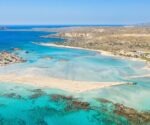
La Manga runs along the Sleeve by the Mar Manor islands (Image: Getty)
A beautiful island chain with a spooky history sits in a sheltered saltwater lagoon and has been mostly cut off from the outside world.
The Mar Menor in the Spanish Region of Murcia is famous not only for its calm salt waters and beautiful weather, but also for housing five islands forged from the sea by volcanic activity. The islands emerged at the end of the Pliocene and have become a tourist attraction and a biodiversity sanctuary.
The lagoon is separated from the Mediterranean Sea by La Manga (the sleeve), a sandbar 22 km in length whose width ranges from 100 to 1,200 metres. Hotels and bars now run along it. The islets within,however, are a protected and little visited landscape, being covered by the Specially Protected Area of Mediterranean Importance status and sitting in a Special Protection Area for bird life.
That does make travelling to the islands difficult, but certainly not impossible. However, you will need to plan ahead and coordinate your trip with one of the boat tours granted permission to land on certain parts of the island chain.

La Manga runs along the wall of the Mar Menor lagoon (Image: Getty Images)
Baron Island
Barón Island is the largest in the Mar Menor and is a refuge of history and nature. It stretches across an area of 94 hectares and is a Natural Reserve, owned by the Figueroa family. The only way to get onto the island (aside from befriending the island-owning family and scoring an invite) is via a Flippa Boat tour.
The island rises up into the centre, where its tallest point towers 104m above the beaches on its outer edges. The island features a Neo-Mudéjar-style palace and a tower built by the Baron of Benifayó, a 19th-century owner. It is associated with a local legend of a “haunted” Russian princess imprisoned there by the Baron, whose ghost is said to wander the cliffs. Although visitors have better odds of bumping into mouflons (wild sheep).
Perdiguera Island
The second largest, Perdiguera Island, was once known for its partridge population and its tomborization process that united it with Espartera Island. However, over the past century, tourism has been limited for two reasons.
During the Spanish Civil War (1936–1939), the island was used as a bombing practice ground. Not all of them detonated, making the island a particularly dangerous place for walkers. In the 1990s, a bomb detection and deactivation campaign was launched over concerns that newly built beach stalls would attract unwitting sunseekers into the danger zone.
However, that didn’t stop visitors coming, and by the late 90s, too much island action was causing large chunks of land to slip into the sea. In 2007, the local council ordered beach vendors to be shut down.

Isla Grosa as seen La Manga del Mar Menor beach (Image: Getty)
Deer Island
This island is the southernmost, 16-hectare volcanic island in the Mar Menor lagoon. It is well known in the region for its fragile ecosystem, which authorities have taken measures to protect by removing a man-made causeway that connected it to the mainland, according to All You Need in Murcia.
Round Island
Round Island is the smallest of the five and least visited, aside from by the waterfowl community, who love to nest here.
Subject Island
Sujeto Island is closest to the coast in the remote and preserved Cala del Pino area. There is little on the island aside from an abundance of thyme and lavender.
If you fancy visiting the island chain from the UK, the nearest airport to Mar Menor is Murcia. This March, there are £13 return flights from Birmingham to the airport, £18 from Manchester, and £19 from London Stansted.